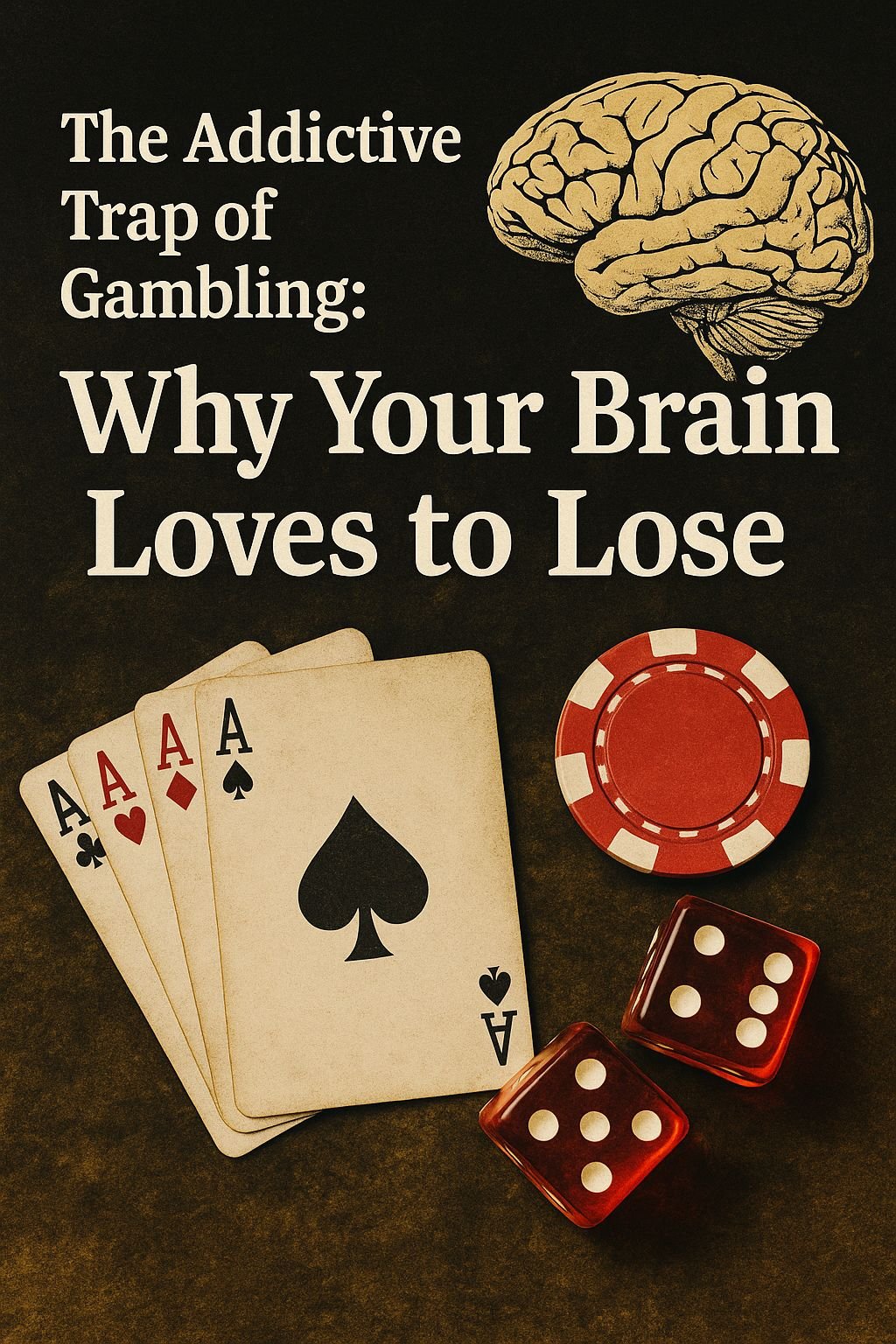
Gambling looks like a game, but it is far from harmless. It is a dangerous loop of psychological tricks and brain chemistry gone rogue. People imagine it as a matter of luck, maybe even a little skill. But what they do not realize is that casinos and gambling apps are built to target your brain’s deepest vulnerabilities. This is not about chance. This is about being hacked by your own nervous system.
Once you fall in, the brain does not need you to win to get hooked. It just needs to believe you might. That is where the trap begins.
How the Brain’s Reward System Gets Hijacked
Your brain has a reward system for a reason. It is meant to keep you alive. When you do something good for your survival, like eating or bonding or achieving something important, the brain releases a chemical called dopamine. That is the good-feeling stuff that tells you, “Yes, do this again.”
But this system is not built for slot machines and spinning wheels. Gambling breaks into that system and hijacks it completely. The scariest part is that dopamine does not wait until you actually win. It shows up even when you are just expecting to win. So when the wheel is spinning, when the cards are about to flip, even if you end up losing, your brain is already lighting up like you did something incredible. This chemical loop is why people get addicted to the experience of gambling, not just the outcome.
The Power of Almost Winning
Here is what really messes people up. It is not the big win that hooks you. It is the “almost” win. That near miss. The one time the number landed one click away from yours. That is what keeps you glued to your seat.
Near misses are scientifically proven to release almost the same amount of dopamine as actual wins. So even though you lost, your brain feels like you got closer. Closer means progress. Progress means hope. And hope is the most dangerous drug of them all.
Scans of people’s brains show that areas like the ventral striatum and the insula light up during these near wins. These are the parts that deal with motivation and reward. That means your brain literally thinks a near miss is a success. And when you feel successful, you keep going.
What Repeated Gambling Does to Your Brain
Once gambling becomes a habit, it starts changing the structure and function of your brain. This is not exaggeration. This is what addiction looks like from the inside.
The prefrontal cortex, which helps with decision-making and impulse control, starts to weaken. The amygdala, which controls emotions, only reacts during gambling or during intense stress. The part of the brain that is supposed to help you feel joy and motivation, the nucleus accumbens, becomes numb to everyday pleasures. So now, things like eating, socializing, or watching a movie just do not feel rewarding anymore. The only thing that feels good is gambling. That is when you know the brain has been completely rewired.
The Role of Other Brain Chemicals
While dopamine is the main character, it is not acting alone. Serotonin is another chemical that plays a role in gambling addiction. When serotonin levels are messed up, you become more impulsive and reckless. You stop thinking things through.
Then there is norepinephrine, which gets released during moments of excitement or stress. It makes your heart race and heightens your emotional reactions. In a gambling environment, which is designed to be fast, bright, and loud, norepinephrine turns every moment into a high-stakes thrill ride. The rush becomes addictive, and you start chasing that feeling, not just the money.
Building Tolerance and Why Quitting Is So Hard
Like any addiction, gambling builds tolerance. The more you do it, the more your brain adapts. Suddenly, the small wins do not hit as hard. You need bigger bets and longer sessions to feel the same thrill.
But here is the most brutal part. Even if you quit, your brain does not forget. It remembers every sound, every light, every pattern. It remembers how it felt when you thought you were about to win. Those neural pathways stay sensitized for a long time. That is why even after months of being clean, one small trigger can set off a full-blown relapse. The brain is always looking for an excuse to get that high again.
Why Some People Get Addicted Faster Than Others
Not every person who gambles ends up addicted. But some brains are more vulnerable than others. People with ADHD, bipolar disorder, or naturally low dopamine activity have a higher risk. Their brains are already wired to seek out stimulation and escape. Gambling offers both, and it offers them fast.
Some people also have underactive prefrontal cortices, meaning their decision-making system is already compromised. Add to that a chaotic or stressful environment, and you have a recipe for addiction. The game is not fair from the start, and for certain people, the system is practically built to break them.
How Gambling Exploits Our Psychological Flaws
Beyond brain chemistry, gambling also plays games with your logic. One of the strongest forces that gambling taps into is something called loss aversion. Basically, people hate losing more than they enjoy winning. The pain of loss is twice as powerful as the joy of gain.
This is why gamblers keep going after they lose. It is not just to win. It is to cancel out the emotional sting of losing. “I just need to win back what I lost” becomes a mantra. The more they lose, the more desperate they get. And desperation is exactly what casinos want.
Another trap is the gambler’s fallacy. This is the belief that if something has happened a bunch of times, the opposite must be about to happen. If red hits five times, people believe black is due. But that is not how randomness works. Each spin or card draw is independent. Your lucky coin, your ritual, your seat at the table — none of it changes the odds. But gamblers start to believe they have control. That illusion of control feeds the obsession.
Why We Remember Wins and Forget Losses
Memory is no help either. Our brains are built to remember big emotional moments. And what is more emotional than winning? People who gamble tend to vividly remember the one time they won big and completely forget the countless small losses that got them there.
Casinos design their environments around this flaw. When someone wins, the whole place explodes with noise, lights, and celebration. It is impossible to miss. But when someone loses? Nothing. Silence. No buzzers. No flashing signs. Losses happen quietly so they do not get stored in your memory as strongly.
This creates a distorted version of reality. You start believing wins happen more often than they do. You become convinced it can happen again. You start telling stories like “I once won ten thousand, so it could happen again,” even if you lost twenty thousand since then. That one big memory keeps you chasing a ghost.
Gambling Is Not Just a Game
When people say gambling is harmless, they do not know what they are talking about. Gambling is not just a bad habit. It is not about greed or stupidity. It is a full-on biological trap, built to exploit everything the human brain does wrong. It turns your logic against you. It messes with your memory. It rewires your reward system. And all of it is carefully designed to make you feel like you’re almost in control, even when you are completely lost.
You do not need to win to stay addicted. You just need to believe you might. And that belief — that flicker of maybe — is what ruins people. It keeps them stuck in a cycle where the brain wants the chase more than it ever wanted the reward.
Gambling does not love you back. It loves your hope. It feeds off your near wins, your desperation, and your silence after a loss. The game is not just stacked against you. The game is you.


Leave a Comment