1. Introduction to Autonomous Vehicles
What are Self-Driving Cars?
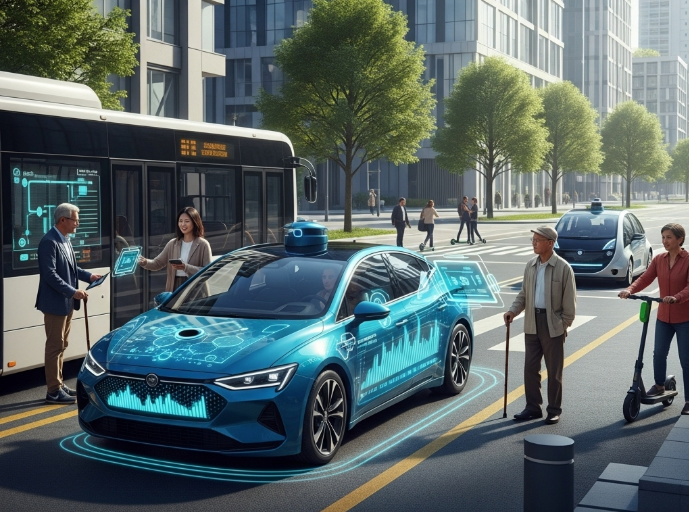
Self-driving cars are vehicles that can understand what’s around them and drive by themselves without needing a person to control them. They use smart computers, sensors, and robots to do this.
Levels of Autonomous Driving (SAE International Standards):
- Level 0 (No Automation): The human driver does all the driving and controls everything.
- Level 1 (Driver Assistance): The car has one automated feature, like cruise control or helping to keep the car in its lane.
- Level 2 (Partial Driving Automation): The car can control steering and speed, but the human driver must always watch and be ready to take control (examples: Tesla Autopilot, GM Super Cruise).
- Level 3 (Conditional Driving Automation): The car can drive by itself in some situations, like in heavy traffic, but the human must be ready to take over if asked (example: Audi Traffic Jam Pilot).
- Level 4 (High Driving Automation): The car can drive itself without help in certain areas or conditions (called the Operational Design Domain). If it leaves that area, it will stop safely (example: robotaxi services in some cities).
- Level 5 (Full Driving Automation): The car can drive anywhere, anytime, in any condition without any human help. This is the final goal and is still being developed.
2. How Self-Driving Cars Work: The Brains and Senses
Self-driving cars constantly collect information from around them and decide what to do in real time. They use several important parts:
- Sensors:
The car’s “eyes and ears” that gather information about its surroundings. - Mapping & Localization:
Helps the car know exactly where it is on a detailed map. - Perception:
The car understands the sensor data to recognize objects like cars, people, and signs. - Prediction:
The car guesses what other people or vehicles might do next. - Planning:
The car decides the safest and best route and moves. - Control:
The car carries out these decisions by steering, braking, and speeding up. - Artificial Intelligence (AI) & Machine Learning (ML):
These are the “brains” that process all the information, help the car learn, and make smart choices.
3. Key Technologies: Sensors in Detail
Self-driving cars use several types of sensors to fully understand their surroundings:
- Lidar (Light Detection and Ranging):
Uses laser pulses to measure distances and create 3D maps. Works well in many light conditions but can struggle in heavy rain, snow, or fog. - Radar (Radio Detection and Ranging):
Sends out radio waves to detect objects and their speed. Works well in bad weather and helps detect objects far away. - Cameras (Computer Vision):
Capture detailed images and videos. Used to identify traffic signs, lights, lanes, and pedestrians. Can have trouble in low light or bright glare. - Ultrasonic Sensors:
Use sound waves to detect nearby objects. Mainly help with parking and detecting objects close to the car. - GPS & IMUs (Inertial Measurement Units):
GPS gives general location data. IMUs measure motion and orientation. Together, they help the car know where it is and how it’s moving. - Sensor Fusion:
Combines data from all sensors to create a clear, reliable understanding of the environment, making driving safer.
4. The Role of AI and Machine Learning
AI and ML help turn raw sensor data into smart decisions:
- Perception:
AI detects, classifies, and tracks objects like cars, pedestrians, and traffic signs in real time. - Prediction:
ML predicts what other road users might do next, such as crossing the street or changing lanes. - Planning & Decision Making:
AI chooses the safest, most efficient routes and maneuvers, like lane changes, turns, and avoiding obstacles. - Learning & Adaptation:
The system keeps learning from real driving and simulations to improve over time and handle new situations.
5. Challenges and Hurdles Ahead
Despite progress, many challenges remain:
Technical Challenges:
- Edge Cases:
Rare or complex situations like unusual road debris or unclear markings that are hard to predict. - Adverse Weather:
Heavy rain, snow, fog, or ice can affect sensor performance and safety. - Unmapped/Dynamic Areas:
Construction zones or areas without detailed maps are difficult to navigate. - Cybersecurity:
Protecting software and connected systems from hacking.
Regulatory & Legal Issues:
- Inconsistent Standards:
Different laws and rules across states and countries complicate deployment. - Safety Certification:
Creating universal safety standards is complex. - Liability:
Determining responsibility in accidents involving autonomous vehicles is legally challenging.
Ethical Considerations:
- The “Trolley Problem”:
Programming decisions in unavoidable accidents, such as choosing between the safety of passengers or pedestrians. - Moral Dilemmas:
Balancing safety, fairness, and efficiency in automated decisions.
Public Acceptance & Trust:
- Skepticism and Fear:
Overcoming public mistrust caused by accidents or glitches. - Building Confidence:
Through transparent testing, strong safety records, and public education.
6. Society & Economy: How Self-Driving Cars Will Affect Us
Jobs and Work:
- Job Loss: Many drivers like truck drivers, taxi drivers, bus drivers, and delivery drivers might lose their jobs because cars will drive themselves. Millions of people could be affected.
- New Jobs: At the same time, new jobs will appear in areas like making and fixing self-driving cars, programming, data analysis, online safety, managing fleets, and creating services inside the cars.
- Training: People who lose their driving jobs will need help learning new skills for these new types of work.
Economy Changes:
- Lower Costs: Businesses that move goods or people will spend less money because they won’t need to pay drivers, and routes will be planned better to save fuel.
- New Business Ideas: Services like on-demand robotaxis, self-driving delivery, and personalized car experiences will grow.
- Insurance: Because self-driving cars may cause fewer accidents, insurance might become cheaper, but insurance companies will have to change how they work.
- Real Estate: Less need for parking lots in cities means more space for homes, parks, or other buildings.
- Productivity: People traveling can use their travel time to work or relax since they won’t be driving, which can make society more productive.
Accessibility and Getting Around:
- Self-driving cars will help elderly people, disabled people, and those who can’t drive to get around more easily.
- They can help solve the problem of “last mile” travel, making it easier to reach places from bus stops or train stations.
City Life:
- Traffic jams and pollution could go down if more people use shared self-driving cars instead of owning their own.
- Cities might change how they are planned, with fewer private cars on the roads.
- But there is a chance that people might take more trips or longer trips because robotaxis are cheap and easy to use, which could increase traffic.
7. What’s Next: The Future Outlook
Technological Advances:
- Better sensors working in all conditions.
- More powerful AI for smarter decisions.
- Cars communicating with each other and infrastructure (V2X).
- Real-time, ultra-precise maps.
Impact on Cities & Transport:
- More shared autonomous cars, less private ownership.
- Smarter traffic flow and less congestion.
- Freed space from parking lots for parks, housing, or shops.
- More mobility for elderly and disabled people.
New Business Models:
- Robotaxi services growing.
- Autonomous delivery for goods.
- New in-car services for work and fun.
Timeline:
- Advanced Level 2 and 3 features in many cars in 5-10 years.
- Level 4 robotaxis in some cities expanding slowly.
- Full Level 5 autonomy likely decades away due to complexity.
8. Conclusion
Self-driving cars will change how we live and travel. Though many technical, legal, and ethical challenges remain, advances in AI, sensors, and connectivity offer:
- Safer roads with fewer accidents.
- Less traffic and pollution.
- More accessible and convenient transport for all.
The path to full autonomy is long, but it promises a safer, smarter, and greener future for transportation.
Leave a Comment